
Personal Attention.
Police Insight.
Powerful Defense.
Police Insight.
Powerful Defense.


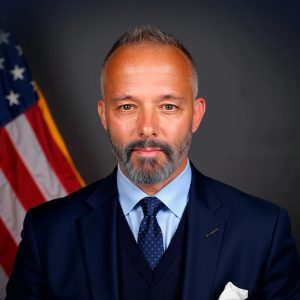
In a sex crime case, the accusation alone can destroy a reputation, a career, and a family before any charge is ever filed. That’s why getting a lawyer involved as early as possible is so important. Attorney Christopher Brown is a Macomb County sex crime lawyer and former Detroit police officer who defends people under investigation and charged with criminal sexual conduct in every Macomb County court. He handles state charges only.
Every case is different, and past results do not guarantee a similar outcome.
Police searched our client’s home under a search warrant. He made no statements. We were retained before any charge was filed, and we immediately sent the officer in charge a letter demanding that all evidence be preserved, including the phone messages of the child’s mother. A year later, our client was charged with two counts of second-degree criminal sexual conduct, each a 15-year felony. We subpoenaed the mother’s phone, which held audio recordings of her coaching the child. We retained a highly qualified expert to review the CARE House forensic interview and the mother’s recordings for suggestibility and memory taint. The expert, who had reviewed more than 1,000 child forensic interviews, concluded this interview was among the three worst he had ever reviewed. Our client also passed a polygraph examination. Faced with the expert’s findings, the prosecutor dismissed both counts before the preliminary examination.
42-1 District Court — Romeo, Macomb County
Our client was accused of inappropriately touching a coworker. Our cross-examination showed the complaining witness’s version of events was physically impossible, and the case was dismissed.
16th Circuit Court — Macomb County
See more of our case results.
Our Romeo case shows why early action matters. First, we had our client preserve his home’s Ring camera footage, which officers had not taken when they executed the search warrant. Next, we interviewed every witness early, while their memories were fresh, and documented everything they told us. We also sent the officer in charge a letter requiring that evidence be preserved. That letter later became key, because the complainant’s mother had multiple recordings of statements on her phone. Finally, we brought in a well-respected clinical forensic psychologist early to identify factors affecting the complainant’s memory. Together, that work led the prosecutor to dismiss both counts before the preliminary exam.
If a detective calls about a sex crime allegation, don’t try to clear things up yourself. In Attorney Brown’s view, a suspect should never deal directly with the police. Instead, hire a Macomb County sex crime lawyer to act as your buffer. An informal conversation can be recorded, summarized in a report, and used against you, and the detective may already know things you don’t.
For more, learn what to do before you talk to police.
Detectives often offer a polygraph as a chance to “clear your name.” Generally, Attorney Brown doesn’t allow clients to take a polygraph offered by the investigating police agency. That agency’s role is to investigate and gather more information, and in his view it’s impossible for the examiner to set that role aside, no matter how they try. The questioning before and after the test can also produce statements used against you.
A private polygraph is the better choice. If you pass, the result can be just as persuasive with the prosecutor as one from the police. And if the result isn’t favorable, the attorney work product privilege can keep the test and everything said during it confidential. In our Romeo case, our client passed a polygraph.
A prosecutor’s charging decision is only as good as the information they receive. Police investigations often focus on building a case, not on finding evidence that helps the accused. That’s why, as a Macomb County sex crime lawyer, Attorney Brown essentially acts as his client’s officer in charge:
When a child makes an allegation, a trained interviewer usually conducts a recorded forensic interview. Michigan has a forensic interviewing protocol designed to avoid suggesting details to the child. We review the complete recording and everything that came before it, including who talked to the child first and what the child heard. Leading or repeated questions, outside influence, and changes in the child’s account can all affect reliability, as our Romeo case showed.
In Macomb County, sex crime cases involving minors, along with many adult sexual assault cases, are handled by the prosecutor’s Child Protection Unit. Attorney Brown’s experience with this unit has been a positive one. In his experience, its prosecutors understand that an allegation alone is enough to destroy a life, and they’re fair in deciding which cases to charge and which shouldn’t be charged. That’s why a Macomb County sex crime lawyer who presents the full picture to them early can make such a difference.
Michigan divides criminal sexual conduct (CSC) into four degrees, based on the type of conduct, the ages of the people involved, and other circumstances such as force or a position of authority.
CSC first degree: involves sexual penetration plus an aggravating circumstance. It’s a felony punishable by up to life in prison.
CSC second degree: involves sexual contact plus an aggravating circumstance. It’s a felony punishable by up to 15 years in prison, and lifetime electronic monitoring can apply in some cases involving a child under 13.
CSC third degree: involves sexual penetration under circumstances such as force or a complainant between 13 and 16. It’s a felony punishable by up to 15 years in prison.
CSC fourth degree: involves sexual contact under circumstances such as force or coercion. It’s a misdemeanor punishable by up to 2 years and a fine of up to $500.
For more detail on these charges across Michigan, see our Michigan sex crimes guide.
A conviction for many sex offenses requires registration under Michigan’s Sex Offender Registration Act (SORA). Registration depends on the exact offense of conviction, not just the label “sex case,” and some reduced charges still require registration. Before any plea, a Macomb County sex crime lawyer should confirm whether the offense requires registration and for how long.
Bond conditions in sex crime cases can be strict. They often include no contact with the complainant, restrictions on contact with minors, limits on internet or device use, and sometimes a tether. A condition like “no contact with minors” can affect your own children, so your lawyer should ask the court for clear, workable terms.
Sex crime cases start in the district court where the offense allegedly happened. Felonies move to the 16th Circuit Court in Mount Clemens if they’re bound over. We defend sex crime charges in every Macomb County district court, including the courts serving Warren, Sterling Heights, Shelby Township, Clinton Township, St. Clair Shores, Roseville, Eastpointe, Romeo, and Chesterfield Township.
For Oakland County cases, see our sex crime defense page.
We also handle Macomb County drunk driving, domestic violence, drug, and gun cases.
Don’t meet with the detective or answer questions on your own. Get the detective’s contact information, politely say your lawyer will be in touch, and call a lawyer right away.
Not one offered by the investigating police agency, in Attorney Brown’s view. A private polygraph arranged through your lawyer can be just as persuasive if you pass, and it stays confidential if you don’t.
Sometimes. A prosecutor’s charging decision depends on the information they receive. Early preservation of evidence, witness interviews, and expert input can give the prosecutor the full picture before deciding.
It depends on the exact offense. Many CSC convictions require registration, but dismissals, acquittals, and some negotiated resolutions don’t. Confirm the registration consequences before entering any plea.
Call (248) 468-1468 or contact us online, especially if a detective has contacted you.