
Personal Attention.
Police Insight.
Powerful Defense.
Police Insight.
Powerful Defense.



Accused of criminal sexual conduct? Christopher Brown is an Oakland County sex crime lawyer and former police officer who knows how detectives investigate these cases. He steps in early to protect your rights, your reputation, and your future.
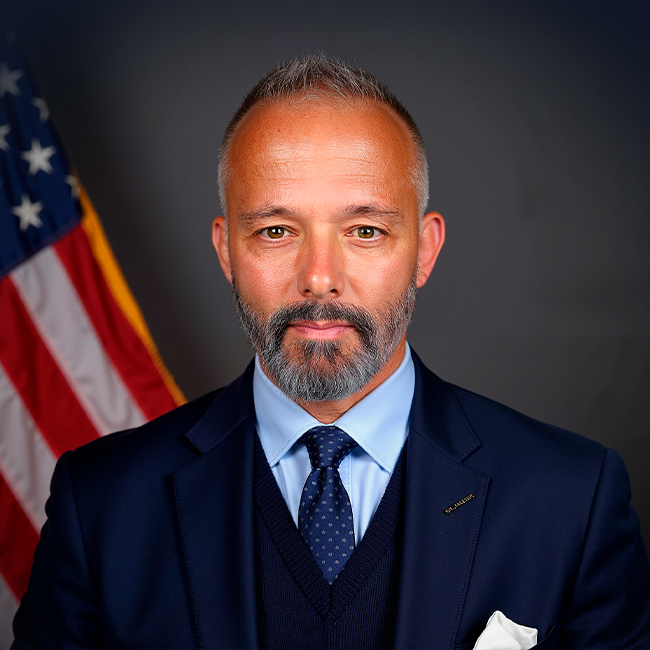
Expert sex crime defense representation by former police officer Christopher Brown over 25 years of experience.
Sex crime investigations in Michigan often begin quietly. Police make inquiries and gather information long before prosecutors file formal charges. Police train officers in interrogation tactics designed to place a suspect at the scene of the alleged crime. These tactics also aim to link the suspect with the alleged victim. Typically, this process involves an interview and often a push for a written statement. If a suspect denies wrongdoing, police will frequently suggest a polygraph examination.
While polygraphs are not admissible as evidence in court, law enforcement uses them as a tool to pressure suspects, obtain more information, and strengthen the case. The reality is that there are numerous variables outside of your control during this stage, and the wrong move can make your situation worse.
Because Christopher Brown is a former police officer, he understands these tactics from the inside. He now uses his prior training to anticipate law enforcement strategies and build a tactical advantage for his clients when defending sex crime allegations.
Police searched our client’s home under a search warrant. He made no statements. We were retained before any charge was filed, and we immediately sent the officer in charge a letter demanding that all evidence be preserved, including the phone messages of the child’s mother. A year later, our client was charged with two counts of second-degree criminal sexual conduct, each a 15-year felony. We subpoenaed the mother’s phone, which held audio recordings of her coaching the child. We retained a highly qualified expert to review the CARE House forensic interview and the mother’s recordings for suggestibility and memory taint. The expert, who had reviewed more than 1,000 child forensic interviews, concluded this interview was among the three worst he had ever reviewed. Our client also passed a polygraph examination. Faced with the expert’s findings, the prosecutor dismissed both counts before the preliminary examination.
Why this matters: Child allegations often turn on how the child was questioned. Preserving evidence early and challenging a tainted interview can end a case before it ever reaches court.
Our client was charged with fourth-degree criminal sexual conduct, a registrable offense, and the case was bound over to the Oakland County Circuit Court.
We obtained the preliminary examination transcript and compared it with the complainant’s initial report. The two were full of contradictions.
Still, our client did not want to risk a trial, because a conviction would have put him on the sex offender registry.
Using those contradictions, we negotiated a plea to a misdemeanor that does not require registration and is eligible for expungement in the future.
Why this matters: In a sex crime case, the registry is often the biggest risk. Exposing weaknesses in the evidence can create the leverage for an outcome that avoids registration entirely.
Our client was accused of inappropriate contact with a minor during a gathering at his home. Police opened an investigation, and the child was referred to CARE House, Oakland County’s child advocacy center, for a forensic interview.
The complainant did not cooperate with police or the interview process. To help make sure the case never reached a courtroom, we arranged for our client to take a private polygraph examination, which he passed. No charges were filed.
Why this matters: The time before charges are filed is often the best chance to stop a case. Acting early, with a lawyer guiding every step, can keep an accusation from becoming a prosecution.
6th Judicial Circuit Court, Oakland County – Jury Trial
Our client was wrongfully accused of criminal sexual conduct in the middle of a bitter divorce and faced three counts of second-degree CSC, each a 15-year felony. At trial, we showed the jury that the State’s forensic interviewer improperly influenced the complaining witness, and that the officer in charge of the case destroyed evidence that may have helped the defense. The jury returned a verdict of not guilty on all three counts.
Our client was charged with failing to register as a sex offender. The officer relied on one witness and never interviewed the people who actually lived in our client’s home. We did, and the charge was dismissed in Clarkston.
The moment someone accuses you of a sex crime, your freedom, your reputation, and your future are at risk. Having a skilled defense attorney by your side from the start is essential. Attorney Christopher Brown works to protect your rights, prevent critical mistakes, and provide a plan of action designed to put you in the strongest legal position possible.
Michigan divides criminal sexual conduct (CSC) into four degrees. Two questions decide the degree: whether the allegation involves penetration or sexual contact, and whether there was an aggravating circumstance, such as the complainant’s age, force, injury, a weapon, or a position of authority.
| Charge | What it involves | Maximum penalty |
|---|---|---|
| CSC 1st degree | Penetration with an aggravating circumstance | Life or any term of years; lifetime GPS monitoring |
| CSC 1st degree, child under 13, accused 17 or older | Penetration | 25-year mandatory minimum, up to life; lifetime GPS monitoring |
| CSC 2nd degree | Sexual contact with an aggravating circumstance | 15 years; lifetime GPS if accused is 17+ and child is under 13 |
| CSC 3rd degree | Penetration with a lesser circumstance | 15 years |
| CSC 4th degree | Sexual contact with a lesser circumstance | 2 years; $500 fine |
| Assault with intent to commit CSC (penetration) | Attempt-type assault | 10 years |
| Assault with intent to commit CSC (contact) | Attempt-type assault | 5 years |
Every degree of CSC requires sex offender registration. Although Michigan law calls CSC 4th degree a misdemeanor, it is registrable, and courts cannot expunge convictions entered after January 12, 2015.
In Michigan, the complainant’s testimony alone can support a conviction. That is why so many of these cases come down to credibility, and why an Oakland County sex crime lawyer has to examine every statement.
For a statewide guide to Michigan sex crimes, including what makes each CSC degree, the evidence rules in CSC cases, and how cases move through court, see our Michigan sex crimes page.
In Michigan, one person’s word is often enough to bring charges. These “he said, she said” cases rely heavily on police interviews, alleged confessions, and polygraph results. Prosecutors can later use your statements in court, even out of context, if you speak without counsel present.
As a defense attorney, Christopher Brown challenges every piece of evidence, works to expose weaknesses in the prosecution’s case, and uses his police training to cross-examine officers effectively. Inconsistent statements, motives to fabricate allegations, and missing evidence can all form the foundation of a strong reasonable doubt defense.
Michigan law makes it a crime to have sexual contact with anyone under 16, regardless of consent. Commonly called “statutory rape,” these cases do not allow defenses based on the victim’s age misrepresentation, maturity, or aggressiveness.
Fortunately, Michigan has a Romeo and Juliet Law that can sometimes prevent youthful offenders from mandatory registration as a sex offender if they meet specific criteria. Attorney Brown carefully evaluates whether these protections apply in each case.
Michigan law punishes making, distributing, and possessing child sexually abusive material (CSAM). Possession carries up to 4 years, distribution up to 7 years, and production up to 20 years.
Those maximums jump to 10, 15, and 25 years if the material includes any video or more than 100 images, which describes most phone and computer cases. Prosecutors often add a separate charge for using a computer to commit a crime.
In an online sting, an officer poses as a teenager, usually 13 to 15, or as a parent offering a child. Charges often include using the internet to communicate to commit a sex crime and accosting a child. Both require registration. The absence of a real child is not a defense.
However, a skilled lawyer can still defend these cases. We look at whether police went beyond offering an opportunity and pushed someone to offend (entrapment), whether the chat began on an adult-only platform or with an adult age, and who was actually using the device and account.
Accosting or soliciting a child under 16 for an immoral purpose is a felony punishable by up to 4 years, or 10 years with a prior conviction. It requires registration, even without any touching.
Prosecutors sometimes offer it as a plea from a CSC charge, but it still carries 25 years of registration.
Indecent exposure is usually a misdemeanor punishable by up to one year. It becomes far more serious if it involves fondling, a minor, or a finding that the person is a “sexually delinquent person,” which can carry up to life.
Prostitution and soliciting an adult are not registrable. A first offense is a misdemeanor punishable by up to 93 days, so the goal is usually to avoid a record altogether.
Often, yes. Prosecutors can charge CSC 1st degree at any time. For CSC 2nd and 3rd degree committed on or after April 2, 2025, the deadline is 15 years or the complainant’s 42nd birthday, whichever is later. Older offenses follow earlier rules.
In contrast, prosecutors generally must charge CSC 4th degree and CSAM offenses within 10 years or by the complainant’s 21st birthday, whichever is later.
Two other rules matter. Time the accused spent living outside Michigan does not count. In addition, when investigators find DNA from an unidentified person, the clock can pause until they identify that person.
If you are facing an old allegation, have a lawyer check the exact deadline for the exact offense date.
All CSC convictions in Michigan require registration under the Sex Offender Registration Act (SORA). Avoiding a conviction—or reducing charges to non-sex crimes—is critical to protecting your reputation and future opportunities. Attorney Brown has successfully obtained dismissals and charge reductions in sex crime cases, helping clients avoid lifelong registration requirements.
Michigan’s registry has three tiers, set by the offense of conviction:
| Tier | How long and how often | Examples |
|---|---|---|
| Tier I | 15 years; report once a year | CSC 4th degree with an adult; possessing child sexually abusive material; indecent exposure involving a minor |
| Tier II | 25 years; report twice a year | CSC 2nd degree with a complainant 13 or older; producing or distributing child sexually abusive material; accosting a child; using the internet to commit a sex crime |
| Tier III | Life; report four times a year | CSC 1st and 3rd degree; assault with intent to commit CSC (penetration); most offenses involving a child under 13 |
A later conviction can move someone to a higher tier. Some people can petition to come off the registry, including certain Tier I registrants after 10 years and some close-in-age cases.
The law is also changing. In 2025, the Michigan Supreme Court ruled that Michigan’s registry is a form of punishment, which has opened new legal challenges. Every registration requirement deserves a careful review.
Avoiding a registrable conviction is almost always the most important goal. Depending on the facts, options may include:
However, each option has strict limits, and courts can never expunge most sex offense convictions. That makes the charging and plea stage the realistic time to protect your future.
Michigan rules of evidence limit what a defendant can present in their defense:
Because of this imbalance, the defense must be aggressive, strategic, and well-prepared. Attorney Brown’s background in police work gives him insight into investigative weaknesses and prosecutorial overreach that he can leverage in court.
In most cases involving a child, the most important evidence is the forensic interview. In Oakland County, these interviews usually take place at CARE House, the county’s child advocacy center.
A trained interviewer speaks with the child alone while police and CPS often watch from another room. CARE House normally records the interview.
Michigan’s forensic interviewing protocol requires open-ended questions and avoiding leading or suggestive ones. We compare the recording to that protocol line by line.
We also look at who talked to the child before the interview, how many times, and whether a custody dispute or other pressure shaped the account. Experts on child memory and suggestibility can help explain why those problems matter. An Oakland County sex crime lawyer should review that recording before anyone makes a decision in the case.
In fact, detectives build most sex crime cases before the accused even knows about the investigation. The evidence that convicts is often the accused’s own words.
As a former Detroit police officer (1996–2003), Christopher Brown knows these techniques from the inside:
False or mistaken allegations often surface during custody or divorce disputes, after a breakup, or after suggestive questioning of a young child.
We move quickly to preserve texts, social media, location data, and video. We gather every prior statement, from the first disclosure to the police report, the forensic interview, and CPS records. And we look closely at motive and timing. An Oakland County sex crime lawyer who starts early has the best chance to find the evidence that matters.
As our results show, a careful investigation can stop a case before prosecutors charge it, or expose contradictions that change its outcome.
If someone has accused you or a loved one of a sex crime in Michigan, do not speak to the police without first consulting a defense attorney. Even a denied allegation or passed polygraph does not prevent charges.
Attorney Christopher Brown offers same-day, evening, and weekend consultations, including jail visits when necessary.
Call today for a Free Confidential Consultation: (248) 468-1468
Facing charges in Oakland County? See our Oakland County criminal defense page, or visit our Troy criminal defense page if your case is in the 52-4 District Court.
See how we got a failure-to-register charge dismissed in Clarkston.
Every degree of CSC, and many related offenses, require registration. However, HYTA, a plea to a non-registrable offense, or a dismissal can sometimes avoid registration. That is why the strategy has to start early.
No, it is a misdemeanor punishable by up to two years. But it still requires registration, and courts cannot expunge convictions entered after January 12, 2015.
No. Only the prosecutor can dismiss a case. A complainant who recants does not automatically end the case.
Not without a lawyer. Detectives often use “just want your side” interviews and pretext calls to build their case. A lawyer can communicate with the detective for you.
Most cannot. Courts cannot set aside convictions for CSC 1st, 2nd, or 3rd degree, CSC 4th degree after January 12, 2015, or child sexually abusive material. Avoiding the conviction in the first place is the realistic goal.
We also defend sex crime charges throughout Macomb County and Wayne County.
Michigan’s criminal sexual conduct laws, beginning with MCL 750.520b, carry some of the harshest penalties in the state. Many convictions also require registration under the Sex Offender Registration Act. Because the stakes are so high, do not speak with detectives before you talk to an Oakland County sex crime lawyer. If police have contacted you, learn about pre-charge criminal investigations and our juvenile defense services. Call (248) 468-1468 for a confidential consultation.