
Personal Attention.
Police Insight.
Powerful Defense.
Police Insight.
Powerful Defense.


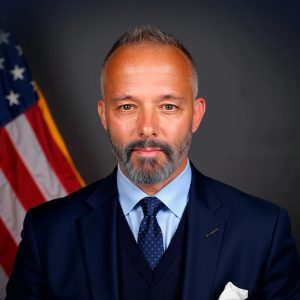
The best way to avoid a drunk driving charge is to know your limits, plan ahead, and use a ride service when you’re not sure. But if you’ve been arrested for OWI in Macomb County, the decisions you make in the first few weeks can shape the outcome. Attorney Christopher Brown is a Macomb County DUI lawyer and former Detroit police officer who defends first- and second-offense OWI, high-BAC, and impaired driving charges in every Macomb County district court.
Every case is different, and past results do not guarantee a similar outcome.
Our client was stopped for a traffic violation. He took the field sobriety tests but declined the roadside breath test, and he was arrested and later charged with high-BAC OWI. He agreed to a blood draw, but he fainted while the nurse was drawing his blood. Staff treated him for the fainting spell and kept drawing blood at the same time. We argued that his consent ended when he lost consciousness, so the police needed a search warrant or, at the very least, proof of voluntary consent. Even though the lab result came back at almost triple the legal limit, the case was resolved with a civil infraction for careless driving.
37th District Court — Warren, Macomb County
Our client was charged with OWI after being stopped for “weaving within a marked lane,” and police gave no other reason for the stop. Michigan law requires a vehicle to be driven “as nearly as practicable entirely within a single lane,” MCL 257.642(1)(a). After reviewing the police in-car video, we concluded our client’s driving stayed within what the statute allows, and we filed a motion to suppress the evidence from the stop. On the day of the hearing, the prosecutor offered to reduce the charge to careless driving, a civil infraction. Our client accepted, avoiding a criminal conviction.
39th District Court — Roseville, Macomb County
See more of our case results.
Most first- and second-offense drunk driving charges in Macomb County are misdemeanors that stay in the district court. The penalties depend on the exact charge, your blood alcohol level, and your record.
OWI, first offense: Maximum jail: 93 days. Fine: $100 to $500. License: 180-day suspension; a restricted license may be available after the first 30 days.
High-BAC “super drunk” OWI (0.17 or higher), first offense: Maximum jail: 180 days. Fine: $200 to $700. License: 1-year suspension; a restricted license with an ignition interlock may be available after the first 45 days.
OWVI (visibly impaired), first offense: Maximum jail: 93 days. Fine: Up to $300. License: 90-day suspension; a restricted license may be available (180 days if drugs were involved).
OWI, second offense within 7 years: Maximum jail: 5 days to 1 year. Fine: $200 to $1,000. License: License revocation.
Community service of up to 360 hours is also possible on a first offense, and probation is common. A third OWI is usually a felony; see our guide to third-offense OWI in Michigan.
In Attorney Brown’s experience, as both a defense attorney and a former police officer, these are the most important things to know during a DUI stop. This is general information, not legal advice for your situation.
A refusal triggers a separate license suspension through the Secretary of State. You generally have only 14 days from the date of the notice to request a hearing, so call a lawyer right away.
Attorney Brown starts every case by reviewing the stop, the arrest, and the testing for mistakes. Police reports often leave out details that the in-car and body camera video shows.
Police need a lawful reason to stop you. In our Roseville case, the officer claimed the car was “weaving,” and once we challenged the stop, the OWI was reduced to a civil infraction.
Chemical tests have to be taken properly and with valid consent or a warrant. In our Warren case, the client’s consent ended when he fainted during the blood draw. Michigan law also says a person with diabetes, hemophilia, or a doctor-directed blood thinner isn’t considered to have consented to a blood draw.
Field sobriety tests must be given and scored correctly, and conditions like lighting, footwear, the road surface, injuries, or anxiety can affect the results. Timing matters too: in some cases, a blood alcohol level that was still rising after the driver stopped driving can be part of the defense.
When the evidence is strong and the police made no mistakes, three factors matter most in reaching a reduction:
The more of these that apply, the harder it is to reach an agreed reduction.
That’s why, while he reviews the arrest for legal leverage, a Macomb County DUI lawyer like Attorney Brown will usually have clients complete a substance abuse evaluation early. A good evaluation can make a real difference later, especially when there’s little legal leverage, because it shows the prosecutor and the judge that you’re taking the case seriously. In Macomb County, an evaluation is also expected when the defense asks the prosecutor for a resolution outside its standard policies.
For eligible clients, a sobriety court offers treatment and close supervision in place of a standard sentence. Michigan’s statewide treatment court report lists sobriety or combined DWI and drug courts at district courts in Warren, Eastpointe, Roseville, St. Clair Shores, and Clinton Township, and the 42-1 District Court in Romeo posts a sobriety and drug court application. The 16th Circuit Court also runs a DWI/Sobriety Treatment Court.
Misdemeanor OWI cases stay in the district court for the city or township where the arrest happened. As a Macomb County DUI lawyer, Attorney Brown defends drunk driving charges in all of them, including the courts in Sterling Heights and Shelby Township, Chesterfield Township and New Baltimore, and the courts listed above. Arrests come from local police departments, the Macomb County Sheriff’s Office, and the Michigan State Police, which patrol I-94, I-696, and M-53.
For a full overview of Michigan drunk driving law, including commercial driver’s license issues, see our Michigan OWI defense page.
Jail is possible but not common on a first offense without aggravating factors. The maximum is 93 days, or 180 days for high BAC, and many first-offense cases end with probation, fines, and classes instead.
No. For most drivers, refusing the roadside preliminary breath test is a civil infraction, not a crime. The official chemical test after an arrest is different, and refusing it brings a one-year license suspension.
Sometimes. Problems with the stop, the arrest, or the testing can lead to a reduction or dismissal, as in our Warren and Roseville cases. When the evidence is strong, your BAC, whether there was an accident, and your record matter most, so it pays to have a Macomb County DUI lawyer review your case early.
Usually, yes, with limits. After a first OWI conviction, a restricted license may be available after the first 30 days of the suspension, or after 45 days with an ignition interlock for high BAC.
Call (248) 468-1468 or contact us online. If you refused a chemical test, call right away so the 14-day hearing deadline doesn’t pass.