
Personal Attention.
Police Insight.
Powerful Defense.
Police Insight.
Powerful Defense.



Arrested for drunk driving? As an Oakland County DUI lawyer and former police officer, Christopher Brown knows how OWI arrests happen and where officers make mistakes. He defends first-offense, high-BAC, and repeat OWI cases across Michigan.
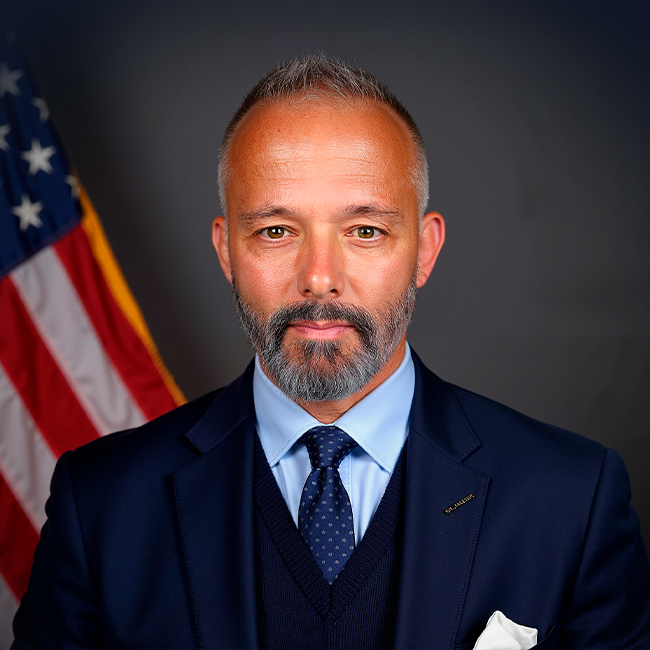
Expert DUI/OWI/DWI defense representation by former police officer Christopher Brown over 25 years of experience.
Michigan drinking and driving laws are among the toughest in the country. A second or third offense can be devastating, with penalties including possible prison time and indefinite license revocation. Attorney Christopher Brown, a former police officer, brings invaluable law enforcement training and courtroom experience to aggressively defend first-time and repeat DUI offenders in every court across Macomb, Oakland, St. Clair, and Wayne Counties.
If you are charged with any misdemeanor or felony offense involving driving under the influence (DUI) of alcohol or drugs, contact Attorney Christopher Brown to get answers to your most pressing questions and a same-day appointment. His background in law enforcement gives him unique insight into police procedure, traffic stops, sobriety testing, and evidence collection—knowledge that can make the difference in your defense.
Our client was charged with a third-offense OWI, a felony that carries up to five years in prison, in the 47th District Court in Farmington Hills. The charge depended on the officer’s belief that an out-of-state drug conviction on her record happened while she was driving, which would have counted as a prior drunk driving offense.
We obtained her complete, correct out-of-state criminal history. It showed she was not operating a vehicle at the time of that arrest. Without that prior, there was no third offense. As a result, the felony was dismissed, and the case went forward as a first-offense OWI.
Why this matters: Prior records are not always right. In a repeat-offense OWI case, we verify every prior conviction, because one error can be the difference between a misdemeanor and a felony.
After her arrest, our client was accused of refusing a breath test because she did not provide a sample. At her implied consent hearing before the Secretary of State, we showed she was having a stress-induced asthma attack and physically could not complete the test. The officer could not meet the burden of proving she unreasonably refused. As a result, she kept her driving privileges.
Our client, a commercial driver, was charged with OWI in Novi after a traffic stop for a turn the officer believed was illegal. The video showed the turn was allowed. We moved to dismiss based on the illegal stop, and the court dismissed the case, protecting her CDL.
The abbreviation DUI is a convenient way to refer to every offense involving operating a vehicle under the influence of alcohol or drugs. Your ticket or court notice may contain another abbreviation such as:
All DUI offenses carry points, potential jail, fines, court costs, and license sanctions. In Michigan, offenses with maximum jail time of more than 1 year are felonies. A 1st or 2nd DUI is a misdemeanor, while a 3rd DUI is a felony.
The penalties for drunk driving in Michigan depend on the exact charge, your blood alcohol level, and your prior record:
| Charge | Possible criminal penalty | Driver’s license |
|---|---|---|
| First OWI | Up to 93 days in jail; $100–$500 fine; up to 360 hours of community service | 180-day suspension; restricted license possible after 30 days |
| “Super Drunk” (.17 or higher), first offense | Up to 180 days in jail; $200–$700 fine | 1-year suspension; restricted license with ignition interlock possible after 45 days |
| First OWVI (impaired driving) | Up to 93 days in jail; up to $300 fine; up to 360 hours of community service | 90-day suspension, with a restricted license possible for the full 90 days (180 days if drugs were involved) |
| OWI with a child under 16 in the vehicle, first offense | Up to 1 year in jail or 30–90 days of community service; $200–$1,000 fine | 180-day suspension; restricted license possible after 90 days |
| Second OWI within 7 years | 5 days to 1 year in jail or 30–90 days of community service; $200–$1,000 fine | License revocation |
| Third OWI (felony) | 1–5 years in prison, or probation with 30 days to 1 year in jail; $500–$5,000 fine | License revocation |
A second offense counts priors from the last seven years. A third offense becomes a felony after two prior convictions at any time in your life. Even so, every prior has to be checked. As our Farmington Hills result shows, a prior that doesn’t qualify can change everything.
These are general penalty ranges, and the details of your record and charge control what applies in your case.
Facing a third OWI? Read our guide to third offense OWI in Michigan, including prison, license, and vehicle consequences and how these felony charges are defended.
Michigan’s implied consent law means that by driving, you agree to a chemical breath, blood, or urine test after an OWI arrest. Refusing that test brings its own penalty, separate from the criminal case.
You have only 14 days to request a hearing. If you refused a test, the deadline to request an implied consent hearing is 14 days from the date of the notice. If you miss it, the suspension takes effect automatically. An Oakland County DUI lawyer can request the hearing for you and prepare to challenge the refusal.
A first refusal brings a one-year license suspension. A second refusal within seven years brings a two-year suspension.
However, a refusal can be challenged. At the hearing, the officer must prove the stop and arrest were lawful, that you were properly advised, and that your refusal was unreasonable. As our result above shows, a medical problem that prevented a test is not an unreasonable refusal.
The roadside breath test is different. Refusing the preliminary breath test at the roadside is a civil infraction. It is not the same as refusing the chemical test after arrest.
After an OWI conviction, the Secretary of State may allow a restricted license after a waiting period. A restricted license lets you drive only for approved purposes, such as work, school, treatment, and court-ordered programs.
For a “Super Drunk” conviction, a restricted license generally requires an ignition interlock device. That device requires a clean breath sample before your car will start.
Some Oakland County courts also offer Sobriety Court programs that can open the door to an interlock-restricted license in repeat-offense cases, including the 52-2 District Court in Clarkston, the 47th District Court in Farmington Hills, and the 51st District Court in Waterford.
For a CDL holder, an OWI threatens your career, not just your record. A first OWI or chemical test refusal generally means a one-year disqualification from driving commercially. It is three years if you were hauling hazardous materials. A second offense can mean a lifetime disqualification.
These rules can apply even if you were driving your own car, not a commercial vehicle. That is why the stop, the test, and every detail of the arrest matter so much in a CDL case. As our Novi result shows, an illegal stop can end the case before your license is ever at risk. If you hold a CDL, talk to an Oakland County DUI lawyer before your first court date.
As a former Detroit police officer (1996–2003), Christopher Brown knows how OWI arrests are made, documented, and sometimes mishandled. We look at every part of the case:
As a former police officer, Attorney Brown knows how DUI arrests are handled from the inside. He understands police training, traffic stop procedures, and testing protocols—and he also knows where mistakes are made. This perspective allows him to challenge evidence such as:
Just because police say they have evidence does not mean it will hold up in court. The prosecution must prove guilt beyond a reasonable doubt, and Attorney Brown will use his knowledge of law enforcement procedures to protect your rights.
Attorney Brown defends every type of DUI case in Metro Detroit, including:
If you have been arrested for any Michigan drinking and driving offense, Attorney Christopher Brown will provide you with the highest level of representation to protect your rights and fight for your freedom. His unique perspective as a former police officer gives him an edge in identifying weaknesses in the prosecution’s case that other attorneys may overlook.
Whether you are a local resident or a visitor from out of state or Canada, Attorney Brown is ready to take swift action, get your case under control, and pursue the most favorable outcome possible.
Call Attorney Christopher Brown today at (248) 468-1468 for immediate help with your DUI case.
Facing charges in Oakland County? See our Oakland County criminal defense page, or visit our Troy criminal defense page if your case is in the 52-4 District Court. See how we got an OWI charge dismissed for a CDL holder in Novi. Learn about the Sobriety Court program in Farmington Hills. See how we got a probation violation dismissed after a false Soberlink reading in Waterford. Facing a probation violation after an OWI? Learn about probation violation defense in Oakland County.
Not necessarily. A first OWI carries up to 93 days in jail, but many first-offense cases are resolved without jail. The outcome depends on your blood alcohol level, the facts of the arrest, and how your case is defended.
Usually, yes, for now. If you failed or refused the chemical test, the officer takes your license and gives you a temporary paper permit. In most cases, that permit lets you drive until your case is resolved.
A third OWI is a felony if you have two prior qualifying convictions, no matter how long ago they happened. However, every prior must be verified. Out-of-state convictions only count if they qualify under Michigan law. Learn more about third offense OWI penalties and defenses.
OWI means operating while intoxicated, including a blood alcohol level of .08 or higher. OWVI means operating while visibly impaired, which is a lesser charge. OWVI is often the result of a negotiated reduction from OWI.
Yes. Federal and Michigan rules can disqualify a CDL holder after an OWI or a test refusal, even in a personal vehicle.
Michigan’s OWI law, MCL 257.625, carries jail time, fines, and license sanctions that grow with each offense. However, many cases have strong defenses, from an unlawful traffic stop to flawed breath or blood testing. An Oakland County DUI lawyer who acts quickly can also help protect your driving privileges. OWI arrests sometimes lead to drug charges or further police investigation. Call (248) 468-1468 for a free consultation.