
Personal Attention.
Police Insight.
Powerful Defense.
Police Insight.
Powerful Defense.


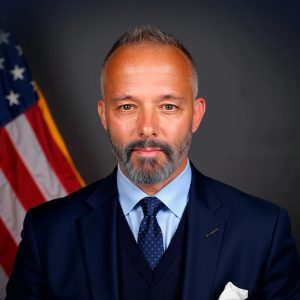
A drunk driving arrest in Wayne County puts your license, your job, and your record at risk all at once. Attorney Christopher Brown is a Wayne County DUI lawyer and former Detroit police officer who made hundreds of DUI arrests himself. Today, he uses that experience to defend drivers in every Wayne County court.
Every case is different, and past results do not guarantee a similar outcome.
Our client was stopped for running a red light and charged with OWI after a breath test showed a .13 BAC. He admitted drinking, but he performed fairly well on the field sobriety tests. After reviewing the audio and video, we found several problems with the breath test. First, the officer cleaned his hands with alcohol-based hand sanitizer and then handled the mouthpiece with his bare hands several times while our client had trouble giving a sample. Second, Michigan’s breath-testing rules require officers to watch a person for at least 15 minutes before the test, and the person must not regurgitate during that time. The video showed our client burping and regurgitating only minutes before the test. After we filed a motion to suppress the breath test, the prosecutor offered a reduction to careless driving, a civil infraction, and our client accepted.
35th District Court — Plymouth, Wayne County
After her arrest, our client was accused of refusing a breath test because she did not provide a sample. At her implied consent hearing before the Secretary of State, we showed she was having a stress-induced asthma attack and physically could not complete the test. The officer could not meet the burden of proving she unreasonably refused. As a result, she kept her driving privileges.
Secretary of State Hearing — Michigan
Our client was stopped for a traffic violation. He took the field sobriety tests but declined the roadside breath test, and he was arrested and later charged with high-BAC OWI. He agreed to a blood draw, but he fainted while the nurse was drawing his blood. Staff treated him for the fainting spell and kept drawing blood at the same time. We argued that his consent ended when he lost consciousness, so the police needed a search warrant or, at the very least, proof of voluntary consent. Even though the lab result came back at almost triple the legal limit, the case was resolved with a civil infraction for careless driving.
37th District Court — Warren, Macomb County
See more of our case results.
As a Detroit police officer, Attorney Brown made hundreds of DUI arrests. He knows what police training teaches officers to look for, and he knows where they make mistakes or take shortcuts. For that reason, he reviews every case for police errors that could lead to suppressed evidence or a dismissal. That review covers the reason for the stop, the field sobriety tests, the arrest, and the chemical test.
When the evidence is strong, the focus shifts. First, Attorney Brown works to protect your driving privileges. Next, he pursues a charge reduction backed by strong mitigation.
A charge reduction isn’t the only goal, but in strong cases it often matters most. In Attorney Brown’s experience, prosecutors routinely reduce a typical first-offense drunk driving charge to operating while visibly impaired (OWVI). An OWVI conviction carries 4 points instead of 6, and a restricted license instead of a hard suspension.
Certain facts make a reduction harder:
Even so, our firm has obtained reductions in cases with all three. Strong mitigation, presented the right way, can still change the outcome.
An evaluation is one of the most important steps in a Wayne County DUI case. Our firm works with a reputable licensed professional counselor who can conduct your evaluation. It serves two purposes. First, it supports the case for a charge reduction. Second, if a court-ordered evaluation comes back with concerning results, we have a second opinion ready.
Even after a reduction, probation conditions matter. Conditions that set a person up to fail do more harm than good. For that reason, Attorney Brown makes sure conditions fit your actual needs and doesn’t accept one-size-fits-all recommendations. In the right case, he has persuaded courts to focus on education, with a class to complete and no probation once the client finishes it.
Legal marijuana didn’t make it legal to drive while impaired. Michigan law covers driving under the influence of marijuana, prescription medication, other controlled substances, or a combination with alcohol. A valid prescription isn’t a defense if the medication impaired your driving.
However, Michigan has no legal THC limit like the 0.08 limit for alcohol. Instead, the prosecutor must prove that the substance actually affected your ability to drive. That distinction matters, because THC can stay in your blood long after its effects wear off.
The roadside preliminary breath test (PBT) is different from the chemical test police request after an arrest. If you refuse the chemical test after arrest, the Secretary of State will suspend your license for one year for a first refusal, or two years for a second refusal within seven years, and add 6 points to your record.
You have only 14 days after the refusal notice to request a hearing. The hearing doesn’t decide whether you’re guilty of drunk driving. Instead, it decides four narrow questions: whether the officer had reasonable grounds, whether police arrested you, whether your refusal was unreasonable, and whether the officer properly advised you of your rights. In our refusal case above, our client kept his driving privileges.
Refusing also doesn’t stop the case. Police can still get a warrant for a blood draw, so the criminal case may continue with blood evidence.
Michigan police now use the Intoxilyzer 9000 for evidential breath tests, replacing the older DataMaster. The state’s rules require a certified operator, approved procedures, regular instrument inspections, and a 15-minute observation period before the test. A challenge works best when it focuses on the specific test, so a Wayne County DUI lawyer should obtain:
As our Plymouth case shows, the video can reveal problems the report leaves out.
Misdemeanor drunk driving cases stay in the district court where the arrest happened. We defend drunk driving charges in every Wayne County district court, including the courts serving Dearborn, Livonia, Westland, and Canton. Several Wayne County district courts also run sobriety or combined drug and sobriety courts for eligible repeat offenders.
A third drunk driving offense is a felony. If you’re facing one, see our third-offense OWI page. For drunk driving defense in Oakland County, see our Oakland County DUI page.
We also handle Wayne County gun cases.
Often, yes. In Attorney Brown’s experience, prosecutors routinely reduce a typical first-offense drunk driving charge to OWVI. A high BAC, an accident, or a prior offense makes a reduction harder, but not impossible.
Yes. Driving while impaired by marijuana is illegal, even though marijuana is legal. However, Michigan has no legal THC limit, so the prosecutor must prove that marijuana actually affected your driving.
The Secretary of State will suspend your license, usually for one year for a first refusal, and add 6 points. You have only 14 days to request a hearing, so contact a Wayne County DUI lawyer right away.
In most cases, yes. A favorable evaluation supports a charge reduction, and it gives you a second opinion if a court-ordered evaluation comes back with concerning results.
Call (248) 468-1468 or contact us online.