
Personal Attention.
Police Insight.
Powerful Defense.
Police Insight.
Powerful Defense.


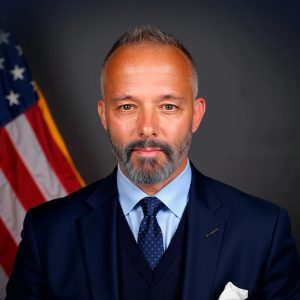
The 23rd District Court on Goddard Road hears criminal and traffic cases from Taylor. Attorney Christopher Brown is a Taylor criminal defense lawyer and former Detroit police officer who defends clients in this court and throughout Wayne County, from retail fraud and drunk driving charges to serious felonies.
Every case is different, and past results do not guarantee a similar outcome.
Taylor police responded to a home after a report of a domestic altercation. Our client was a visitor in the home and wasn’t involved. Officers quickly detained the two people involved in the altercation. Our client didn’t want to give a statement, so he walked away. Officers grabbed him, he kept walking, and they took him to the ground and charged him with resisting and obstructing an officer, a felony. After reviewing all the evidence, we determined that once police had detained the people involved, they had no lawful reason to detain our client. He had no obligation to speak with police, and he had the right to go about his business. The district court bound the case over after the preliminary exam, so we filed a motion to quash in circuit court. The circuit court found that the district court had abused its discretion and dismissed the case.
23rd District Court and Third Circuit Court — Taylor, Wayne County
Our client was on probation for a domestic violence offense, with a condition that he have no contact with the complainant. During a bitter divorce, she accused him of calling her at all hours of the night from different phone numbers and hanging up.
We challenged that story with evidence. We obtained our client’s phone records and subpoenaed video from a business where he was making a purchase at the exact time one of the calls supposedly came in. The video showed he was not on his phone. The court found him not guilty of the alleged violation.
24th District Court — Allen Park, Wayne County
See more of our Wayne County and other case results.
The 23rd District Court handles misdemeanor and felony cases that arise in Taylor. Misdemeanors stay in this court through sentencing. Felonies start here with arraignment and the preliminary exam, and if the judge binds the case over, the case moves to the Third Circuit Court in Detroit.
Address: 23365 Goddard Rd., Taylor, MI 48180
Phone: (734) 374-1334
Hours: 8:30 a.m. to 4:00 p.m., Monday through Friday
Judges: Chief Judge Victoria Shackelford and Judge Brittany Johnson
Magistrate: Britney L. Carmona
Serves: City of Taylor
Case lookup: Search your case on MiCOURT, Michigan’s statewide case search.
Court details can change, so check the court’s website or call before your court date.
In the 23rd District Court, scheduled proceedings take place by Zoom unless your notice to appear says “IN-PERSON.” However, all jury trials are in person. Read your notice carefully, because missing a Zoom hearing has the same consequences as missing court in person.
Chief Judge Victoria Shackelford joined the court in 2021. Before that, she served as a Wayne County assistant prosecutor, where she led the arson unit and worked in the homicide and community prosecution units. Earlier in her career, she practiced criminal defense and represented clients as a public defender. In Attorney Brown’s experience, Judge Shackelford is very direct and candid. You never have to wonder how she feels about an issue, and he finds that refreshing, because you always know where you stand. She is also fair, and she expects counsel to come prepared and keep the docket moving.
Judge Brittany Johnson joined the court in March 2026. She served as a Wayne County assistant prosecuting attorney beginning in 2019, and she also holds a Master of Social Work.
For a Taylor criminal defense lawyer, that means one thing: come prepared, know the facts, and be ready to make your argument clearly.
In Attorney Brown’s experience, the Taylor Police Department is proactive, much like Warren and Livonia, in its tactics and its contacts with people. As a result, many Taylor cases start with an officer-initiated stop or encounter.
Attorney Brown served as a Detroit police officer, so he knows how officers are trained to justify a stop, a search, and an arrest. Police need reasonable suspicion to detain you and probable cause to arrest you. When police don’t have a lawful reason to detain someone, as in our Taylor case above, the charges that follow can be challenged. If a detective has contacted you before any charge, learn what to do before you talk.
Resisting and obstructing an officer is a felony in Michigan, and it often comes from a fast-moving encounter. However, Michigan law requires the prosecutor to prove that the officer’s actions were lawful. If the officer had no legal basis to detain or arrest you, the charge can fall apart. Even so, never physically resist an officer on the street. The time to challenge an unlawful stop is in court, through your lawyer.
Southland Center draws shoppers from across Downriver, and like most large malls, it sees its share of retail fraud and theft cases. Store security reports and video often drive these cases, and they don’t always tell the whole story. A first-offense retail fraud charge can often be resolved without a lasting conviction, but a theft conviction can follow you into job and school applications.
The court’s probation department handles presentence investigations and supervises people on probation. In addition to standard probation, the court offers an Intensive Supervision Program. Probation expectations are strict, so plan for random testing and on-time reporting from day one.
Michigan’s statewide treatment court directory lists a Hybrid DWI/Drug Court at the 23rd District Court. The court calls it the Regional Treatment Court Program. For eligible clients, it offers treatment and close supervision in place of a standard sentence, and for some drunk driving clients, it can open a path to a restricted license with an ignition interlock. Admission depends on screening, so ask about it early.
In the 23rd District Court, the prosecutor depends on how you were charged. The Wayne County Prosecutor’s Office handles state prosecutions, including every felony case. The Taylor City Attorney’s Office prosecutes charges under a city ordinance. Knowing which office has your case helps your Taylor criminal defense lawyer get the reports and video quickly and negotiate with the right person.
Misdemeanor cases: After arraignment, the next date is usually a pretrial conference, where many cases resolve. Cases that don’t settle move to motions or trial in the 23rd District Court.
Felony cases: A felony starts with arraignment, a probable cause conference, and a preliminary examination in the 23rd District Court. If the judge binds the case over, it moves to the Third Circuit Court at the Wayne County Criminal Justice Center in Detroit. As our Taylor case shows, a bindover isn’t the end of the road; a motion to quash can still win a dismissal.
Beyond Taylor, we defend clients in nearby Dearborn Heights, Allen Park, Southgate, Romulus, and Inkster, and throughout the Downriver communities.
The 23rd District Court is at 23365 Goddard Road in Taylor. It hears criminal and traffic cases from the City of Taylor. Felony cases start there and, if the judge binds the case over, move to the Third Circuit Court in Detroit.
Probably. The 23rd District Court holds scheduled proceedings by Zoom unless your notice to appear says “IN-PERSON.” However, all jury trials are in person.
Generally, no. You don’t have to answer police questions. However, never physically resist an officer. If police detain you without a lawful reason, a Taylor criminal defense lawyer can challenge it in court, as we did in our Taylor resisting and obstructing case.
Yes. Michigan’s directory lists a Hybrid DWI/Drug Court at the 23rd District Court. Admission depends on screening, so ask about it early.
Call (248) 468-1468 or contact us online.