
Personal Attention.
Police Insight.
Powerful Defense.
Police Insight.
Powerful Defense.



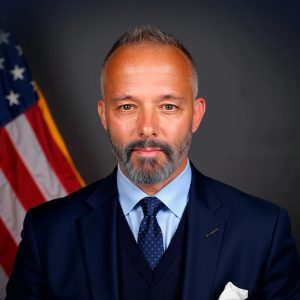
Washtenaw County’s criminal courts run from the 15th District Court in downtown Ann Arbor to district court locations in Pittsfield Township, Ypsilanti, Chelsea, and Saline, with felony cases at the 22nd Circuit Court. Attorney Christopher Brown is a Washtenaw County criminal defense lawyer and former Detroit police officer who defends clients in the county’s circuit and district courts, from misdemeanors to serious felonies.
Every case is different, and past results do not guarantee a similar outcome.
Our client was charged with multiple felony counts of health care fraud. We negotiated a no contest plea to a single felony count that may later be set aside, and restitution was reduced to one-third of the original amount. Our client received non-reporting probation and no jail time. The court also allowed our client to keep working in the industry, over the probation department’s recommendation.
22nd Circuit Court — Washtenaw County
Our client was wrongly accused of inappropriate sexual contact. We investigated the allegations, interviewed every witness, and gave the investigator information showing the complainant’s statement was false. No charges were filed.
Washtenaw County
The probation officer accused our client of not making enough effort to pay court-ordered restitution. At the violation hearing, we showed our client had made good-faith payments and could not pay the full amount before the case closed. The court agreed and dismissed the violation.
22nd Circuit Court — Washtenaw County
See more of our case results.
In Attorney Brown’s experience, the 14A District Court carries a large caseload at all four of its locations, and it expects attorneys to work their cases from day one. Discovery, bond issues, and negotiations need attention right away. The court doesn’t tolerate a “kick the can down the road” approach, and that expectation applies to the defense and the prosecution alike.
For that reason, a Washtenaw County criminal defense lawyer should come to the first pretrial already prepared. That means requesting the reports and video early, raising any bond problem immediately, and knowing what resolution the client needs.
In Attorney Brown’s experience, the court may set a final pretrial when a misdemeanor with a named victim doesn’t resolve, and the complaining witness must attend. If the witness doesn’t appear, the court can dismiss the case. That makes preparation for that date especially important.
The Washtenaw County Prosecutor’s Office has a written policy that directs its prosecutors away from requesting cash bail. In Attorney Brown’s experience, the office, in the appropriate case, favors release without a cash bond, with the appropriate conditions. The judge still decides bond. A strong bond request gives the court specific facts: where you live and work, your history of coming to court, any treatment you’re in, how you’ll get to court, and a plan for any safety concerns. If you have a warrant, learn how to turn yourself in on a Michigan warrant.
The Washtenaw County Prosecutor’s Office brings state charges throughout the county, felonies included. In Ann Arbor, the City Attorney’s Office prosecutes violations of city ordinances. The county office publishes written policies on many types of cases, and they can shape the right request:
The office’s leadership is changing in December 2026, and a new prosecutor can revise these policies. A Washtenaw County criminal defense lawyer should confirm the current version before relying on one.
For eligible cases, Michigan’s deferral laws can also lead to a dismissal or a nonpublic record, including HYTA for young adults and 7411 for first-time drug possession.
As a former Detroit police officer, Attorney Brown reads police policies the way officers on patrol actually apply them. The Washtenaw County Sheriff’s Office publishes its written policies, and they can reveal what records should exist. For example, its consent-to-search guideline requires a deputy to have a stated reason before asking to search and to tell the person they can refuse. Its recording guideline calls for deputies to start body cameras early and to record through the end of a call.
When the report, the paperwork, and the video don’t line up, we can challenge the evidence. Municipal police departments, including Ann Arbor and Ypsilanti, may follow different policies, so the right records depend on which agency made the arrest. When a detective reaches out before the prosecutor files a charge, learn what to do before you talk.
The 22nd Circuit Court, at 101 East Huron Street in Ann Arbor, hears felony cases in Washtenaw County. Felonies start in district court and move to the circuit court after a bindover at the preliminary exam.
A Washtenaw County case begins in the district court that serves the community where police made the arrest. Washtenaw County has three district courts:
Because 14B covers Ypsilanti Township and 14A-2 covers the City of Ypsilanti, the right court depends on exactly where the arrest happened.
Treatment courts give eligible clients a path built on treatment and close supervision instead of a standard sentence. Michigan’s statewide directory lists hybrid DWI/drug treatment programs at all three Washtenaw district courts and at the 22nd Circuit Court. The 15th District Court in Ann Arbor also runs mental health and veterans treatment courts. Each program makes its own admission decision, so ask about these options early, before any plea that depends on acceptance.
We defend clients throughout Washtenaw County, including Ann Arbor, Ypsilanti, Ypsilanti Township, Pittsfield Township, Saline, Chelsea, Dexter, and Milan. We also represent clients in Oakland County, Macomb County, and Wayne County.
It depends on where the arrest happened. Ann Arbor cases go to the 15th District Court, Ypsilanti Township cases go to 14B, and the rest of the county goes to one of the four 14A locations. Felonies move to the 22nd Circuit Court in Ann Arbor after a bindover.
Not always. The prosecutor’s office has a written policy that directs its prosecutors away from requesting cash bail, and in the appropriate case it favors release with conditions. The judge makes the final decision, so a prepared bond request matters.
In Attorney Brown’s experience, if a misdemeanor with a named victim doesn’t settle, the judge may schedule a final pretrial and require the complaining witness to come. When the witness doesn’t show up, the judge may dismiss the charge.
Possibly. Depending on the charge, options include the prosecutor’s restorative justice program, treatment courts, and Michigan’s deferral laws such as HYTA and 7411. Ask a Washtenaw County criminal defense lawyer which option suits your charge and record.
Call (248) 468-1468 or contact us online.